Human Rights Coursework
Through my Human Rights and Social Justice coursework, I developed a critical and evolving understanding of how human rights frameworks are constructed, debated, and applied across historical, political, and contemporary contexts. As an Indigenous mother, these discussions were not abstract concepts to me, they were deeply personal and grounded in lived experiences of colonialism, intergenerational trauma and resilience. My learning was shaped by the understanding that human rights are not experienced equally, but are mediated through systems of law, governance, and institutional power that continues to disproportionately impact Black, Indigenous, and marginalized communities. This perspective also connects to my longer-term commitment to advocacy and my interest in pursuing law school, where I hope to contribute to more equitable and trauma-informed approaches to justice.
HRSJ 5010: Foundations of Human Rights & Social Justice
I was introduced to foundational theories on human rights, justice, and structural inequalities. This course helped me understand that human rights frameworks are not universally applied, but are historically constructed and shaped by political, legal, and economic interests, shaped by capitalist systems. I began to critically examine how institutions determine whose rights are recognized, protected, or ignored, and how these decisions are embedded in systems of power. This foundational learning shifted my perspective from viewing human rights as fixed principles to understanding them as spaces that require ongoing criticisms, accountability, and real action. Like the 94 Calls to Action, without implementation, they remain only words on paper.
HRSJ 5110: Genocide of the 20th Century
In HRSJ 5110 Genocide in the 20th Century, my understanding deepened in a more difficult and emotional way. Through comparative genocide analysis, including Rwanda and other major case studies, I began to see how systemic violence is recognized differently depending on political interests and global power structures. One of the most impactful realizations for me was understanding how definitions of genocide, as outlined by the United Nations, have historically excluded settler colonialism, despite its genocidal impacts on Indigenous peoples. This exclusion was not just an academic gap, it was something that felt deeply connected to my own community’s lived reality. It raised important questions for me about how international law is shaped, who gets to define violence, and how those definitions influence what is acknowledged, documented, or silenced. This course also helped me understand that genocide is not only a historical event, but an ongoing structure of harm that continues in different forms across time and place. When I connected these ideas to present day realities, including ongoing crises affecting Indigenous communities. It became clear to me that state violence is not always recognized in real time. Instead, it is often normalized, minimized, or reframed in ways that make it harder to name. This understanding was difficult, but it also strengthened my commitment to truth telling and accountability.
HRSJ 5220: Trauma, Rights, and Justice
In HRSJ 5220 Trauma, Rights, and Justice, I further explored how trauma is produced and sustained through systems of injustice. This course helped me understand that trauma is not only individual, but also collective and structural. For Indigenous peoples, trauma is deeply connected to residential schools, the child welfare system, missing and murdered Indigenous women and girls, and ongoing systemic inequities. This learning resonated with my lived experience and the experiences of women and families I have known and worked with.
What stood out most to me in this program is the connection between trauma and rights. I began to understand that human rights violations are not separate from trauma they actively produce it, sustain it, and pass it through generations. This shifted how I think about justice. It is not only about legal recognition or policy change, but about healing, repair, and the breaking of cycles of harm that continue to impact families today.
As I moved through these courses, I also began to reflect more deeply on my own responsibility as an Indigenous mother. My learning was not only academic it was personal, emotional, and tied to how I understand my role in supporting my daughter and future generations. I found myself constantly thinking about how systems of law and governance impact families in real time, not just in theory. This awareness strengthened my sense of responsibility to use my voice in ways that support accountability, representation, and truth-telling for those who have been silenced or excluded.
Overall, my Human Rights coursework has shaped a critical understanding of how systems of power operate and how they continue to shape inequality in both visible and invisible ways. It has also strengthened my motivation to pursue law school, not only as a professional goal, but as a continuation of my commitment to justice grounded in lived experience. More importantly, this learning has reinforced my belief that meaningful change requires both critical engagement with systems and a deep commitment to listening to the voices and experiences of those most impacted. For me, human rights are not just an academic concept. They are lived, contested, and deeply personal. This program has not only expanded my knowledge, but has also strengthened my voice, my confidence, and my understanding of the responsibility I carry as someone committed to justice, healing, and breaking intergenerational cycles of harm.
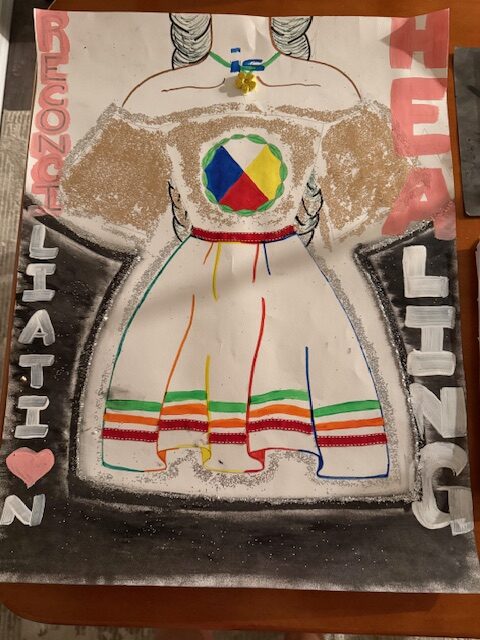
Social Justice Coursework:
My social justice coursework deepened my understanding of systemic inequality, Indigenous knowledge systems, and the ongoing impacts of colonialism within contemporary society. I engaged with this learning not only academically but through a lived awareness of how structural injustice continues to shape Indigenous families and communities. This perspective grounded my studies in responsibility, advocacy, and a commitment to using my voice to challenge systems that perpetuate harm while supporting pathways toward justice and accountability. It also reinforced my long-term interest in pursuing legal education as a way to better understand and engage with systems that impact Indigenous peoples, especially in relation to rights, policy, and representation.
HRSJ 5120: Settler Colonialism and Decolonization
I critically examined settler colonialism as an ongoing structure rather than a historical event. This course helped me understand how colonial systems continue to shape Canadian institutions, governance, and policy frameworks in ways that directly affect Indigenous peoples. Issues such as the Indian Residential School system, Missing and Murdered Indigenous Women, Girls, and Two-Spirit people, and systemic inequities within the justice system were central to my learning. These were not abstract topics for me, they reflected lived realities within Indigenous communities and the ongoing impact of colonial policies today. Through this course, I developed a deeper understanding of decolonization as more than a theoretical concept. It requires active disruption of dominant narratives, recognition of Indigenous sovereignty, and the centering of Indigenous voices in decision-making processes. I also began to critically reflect on how institutions can reproduce colonial logics even when they are framed as inclusive or reform-oriented. This learning challenged me to think more critically about how justice systems must move beyond symbolic acknowledgement toward meaningful structural change.
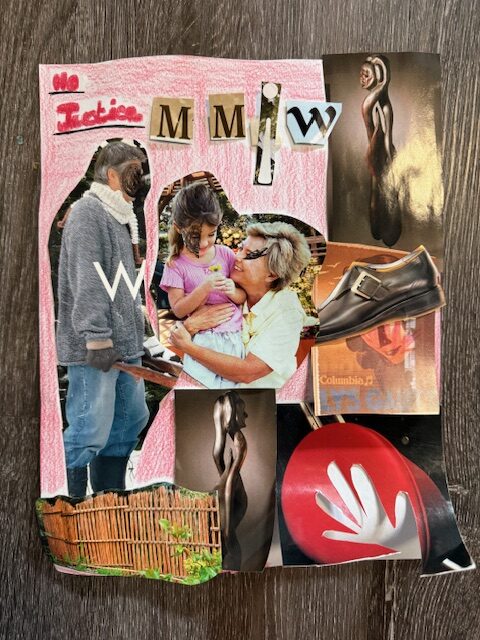
HRSJ 5020: Indigenous Ways of Knowing: Pedagogies and Practices
I developed a strong respect for Indigenous knowledge systems as relational, experiential, and grounded in land, community, and responsibility. I learned that Indigenous ways of knowing are not static academic theories, but living systems of knowledge transmitted through relational teaching, practice, and intergenerational learning. Experiencing these pedagogical approaches in the classroom reinforced the importance of relational accountability, collective learning, and respect within educational spaces. The use of circle pedagogy highlighted that knowledge is not owned by individuals but shared within relationships and communities. This challenged Western academic assumptions about knowledge production and reinforced that learning is most meaningful when grounded in connection, reciprocity, and lived experience. It also strengthened my understanding that Indigenous knowledge systems exist beyond institutional spaces and remain rooted in land and community, regardless of colonial boundaries or academic frameworks.
Across my social justice coursework, I also engaged with broader global and national issues, including Black Lives Matter, ongoing water insecurity in First Nations communities, and the continued impacts of policy frameworks such as the Indian Act, the White Paper, and the United Nations Declaration on the Rights of Indigenous Peoples (UNDRIP). These frameworks demonstrated how law and policy can both reinforce and challenge systemic inequality depending on how they are applied and interpreted. I became increasingly aware of how legal and political systems shape access to rights, resources, and justice in unequal ways. Importantly, I also developed a deeper understanding that while provincial and municipal boundaries may define governance structures, they do not define or limit Indigenous knowledge systems or ways of being. Indigenous knowledge exists beyond imposed borders and remains grounded in land, memory, and relational responsibility. This understanding challenged me to think beyond state-based frameworks and to recognize Indigenous sovereignty as continuous and inherent rather than granted by external systems. This body of coursework strengthened my understanding that social justice requires both critical analysis and active engagement with systems of power. It reinforced my responsibility to use my voice in ways that support truth-telling, accountability, and the amplification of Indigenous perspectives. This learning continues to inform my academic journey and strengthens my motivation to pursue pathways where I can contribute to systemic change grounded in lived experience, community priorities, and justice oriented practice. It also reminded me that social justice work is not only about identifying inequities, but about sustaining long term commitment to change, even when systems feel resistant to transformation. These courses strengthened my ability to hold both critique and hope, recognizing that decolonization and equity require ongoing effort, relational accountability, and consistent presence in both academic and institutional spaces.
Practicum:
My practicum experience provided meaningful applied learning that strengthened my ability to engage with research, policy analysis, and legal frameworks in real world contexts. Through my placement with the BC Law Institute, I focused on Indigenous data sovereignty, which deepened my understanding of the importance of Indigenous control, governance, and authority over data, knowledge systems, and research processes. This experience reinforced that research is not neutral or purely technical, but deeply connected to power, self-determination, and the ongoing impacts of colonial governance structures. This learning also felt personally significant, as it aligned with my commitment to supporting systems that better reflect and protect Indigenous communities.
A key part of my practicum learning was developing the ability to read and interpret court documents and legal jargon. This was a practical and challenging skill that required me to engage more deeply with legal language and institutional processes that are often inaccessible or overwhelming. Over time, I became more confident in navigating legal terminology and understanding how legal frameworks are structured and applied. This experience strengthened my analytical skills and gave me insight into how language within the legal system can either create barriers or support access to justice, depending on how it is used. It also directly connects to my long-term goal of pursuing law school, as it provided foundational exposure to legal reasoning, documentation, and procedural thinking.
Throughout the practicum, I also became more aware of how policy frameworks and government documentation can contain significant gaps, particularly in relation to Indigenous rights and representation. I observed how definitions, clauses, and administrative language can unintentionally or intentionally limit Indigenous self-determination and governance. This reinforced my understanding that policy is not just administrative, it is deeply political, shaping how rights are recognized, interpreted, and enacted in practice. It also strengthened my ability to critically read institutional texts and identify where systemic inequities may be embedded within formal structures. This experience helped me connect theoretical learning from my coursework to real world systems of governance and justice. It highlighted how academic knowledge becomes applied in spaces where decisions have direct and immediate impacts on communities. This connection between theory and practice reinforced the importance of connecting academic study with lived realities, especially in relation to Indigenous governance, legal frameworks, and research ethics.
My practicum also deepened my understanding of Indigenous data sovereignty as a critical area of human rights and social justice work. I learned that data is not just information, but a form of power that influences narratives, policy decisions, funding allocations, and governance structures. Recognizing the importance of Indigenous control over data reinforced the broader principle of self-determination and highlighted the need for research practices that are ethical, accountable, and community driven. This learning strengthened my respect for Indigenous governance systems and the importance of ensuring that research supports, rather than undermines, Indigenous priorities.
Throughout this experience, I also reflected on my positionality as an Indigenous mother navigating academic and professional spaces. This perspective shaped how I approached the work, particularly in relation to responsibility, advocacy, and future goals. It also strengthened my awareness of the importance of creating pathways for Indigenous voices within institutional systems, especially in law and policy where decisions have long-term impacts on communities. My practicum experience provided valuable applied skills in research, legal interpretation, and policy analysis. It strengthened my critical awareness of how institutional systems operate and reinforced my commitment to working in spaces where I can contribute to more equitable and accountable approaches to justice. This experience continues to inform my academic journey and supports my long-term goal of engaging more deeply in legal and advocacy work that centers Indigenous perspectives and lived experience.
It also reinforced that working within legal and institutional systems requires patience, precision, and attention to detail, as even small differences in language or documentation can significantly affect interpretation and outcomes. I learned that confidence in these spaces develops over time, but is essential for meaningful engagement in policy and legal contexts. This experience strengthened my sense of direction and confirmed my commitment to continuing to build skills that will allow me to support Indigenous communities through legal and advocacy-based work.
Experiential Learning:
My experiential learning throughout the MA program was shaped by a combination of academic engagement, creative practice, and community-based learning that extended beyond the traditional classroom. As an Indigenous mother, these experiences were particularly meaningful because they reflected not only intellectual growth, but also personal responsibility, lived awareness, and a commitment to using my voice in ways that contribute to justice, truth-telling, and community advocacy. Across these experiences, I came to understand that learning is most powerful when it is relational, embodied, and connected to real-world issues affecting Indigenous and marginalized communities.
HRSJ 5140: Art, Media, and Dissent.
I explored creative expression as a form of resistance, communication, and social critique. This course allowed me to engage with art and media not only as expressive tools, but as powerful methods of challenging dominant narratives and making systems of injustice visible. My participation in the Profs Picks Art Gallery at Thompson Rivers University was a significant part of my learning experience.
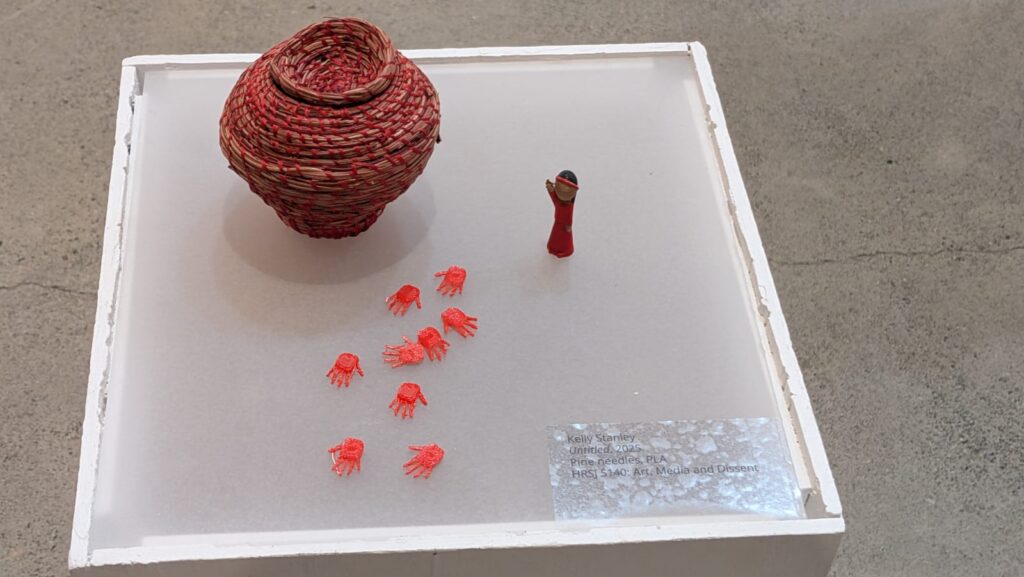
My selected artwork, drawn from this course, focused on Missing and Murdered Indigenous Women, Girls, Two-spirit peoples (MMIWGS2) was intended to amplify awareness, resistance, and remembrance through visual storytelling.
Although the piece remained untitled due to a personal car accident during the semester that limited my ability to connect with my instructor, the work itself remained deeply meaningful. It represented my ongoing commitment to advocacy and to using creative expression as a way to honor lived experiences and bring attention to systemic violence affecting Indigenous communities. This experience reinforced for me that even when circumstances disrupt process or structure, the intention behind creative work can still carry meaning, purpose, and impact.
HRSJ 5150: Truth to Power
I further developed my ability to use storytelling as a form of advocacy through script writing. My project focused on water justice, highlighting ongoing inequities faced by Indigenous communities across Turtle Island. This experience allowed me to translate research and lived awareness into narrative form, making complex social justice issues more accessible and emotionally resonant. It reinforced my understanding that storytelling is not only an artistic practice, but also a powerful tool for truth-telling, education, and systemic critique.
My experiential learning came through participation in group work, presentations, and collaborative academic engagement. These experiences provided opportunities to engage with diverse perspectives, practice communication skills, and reflect on both individual and collective contributions to learning environments. They also helped me further develop confidence in articulating ideas related to human rights and social justice in both academic and creative contexts.
An impactful learning experience was attending a North Shore art gallery created by a former student, whose work was connected to supporting the local homeless community. This visit demonstrated the role of creative expression in community engagement and social support. It highlighted how art can function not only as commentary, but also as active participation in addressing social issues such as homelessness, exclusion, and community well-being. Seeing creative work used in this way reinforced my belief that justice-oriented practice can exist outside of formal institutions and still have meaningful impact at the community level.
Engagement with Elders and Indigenous knowledge keepers throughout my courses also contributed significantly to my experiential learning. These teachings emphasized relational accountability, land-based learning, and the importance of knowledge as something that is lived and shared rather than simply taught. Listening to these perspectives reinforced the importance of humility, respect, and reciprocity in learning, and deepened my understanding of Indigenous pedagogies as foundational rather than supplementary to education. It also reinforced that knowledge is strengthened through relationship, not separation.
My experiential learning reinforced that education must extend beyond the classroom and into lived, relational, and community-based practice in order to meaningfully engage with human rights and social justice. I learned that creative expression, storytelling, and engagement with community are not secondary forms of learning, but essential ways of understanding and responding to injustice. These experiences continue to shape how I understand my role as a student, emerging advocate, and community member, and strengthen my commitment to using my voice in ways that contribute to truth-telling, accountability, and systemic change grounded in lived experience.
These experiences collectively reinforced that education is most meaningful when it is connected to real communities and lived realities. They also strengthened my belief that creative expression and storytelling are not secondary forms of learning, but essential ways of engaging with truth, memory, and justice. As I move forward, I continue to carry these lessons with me, along with a commitment to advocacy, accountability, and contributing to more just and inclusive systems that honour Indigenous knowledge and lived experience.