- Demonstrate a critical awareness and understanding of the past and present debates that have shaped human rights and social justice issues.
In my academic and practicum experiences, I have developed a critical awareness of the past and present debates that shape human rights and social justice issues through Indigenous ways of knowing and lived experience. Much of my learning has been rooted in understanding how colonial systems continue to impact Indigenous communities today, especially through issues such as the Indian Residential School system and ongoing crisis of Missing and Murdered Indigenous Women and Girls (MMIWG). These are not historical issues for me, they are ongoing realities that continue to shape my research, art, and understanding of justice.
This map of Alberta identifies three locations connected to my lived experience, illustrating how MMIWG2S remains a present and localized human rights concern:
Through courses such as genocide and trauma, rights, and justice, I developed a deeper understanding of injustices, including how definitions of genocide, as outlined by the United Nations, have historically excluded settler colonialism, despite its genocidal impacts on Indigenous people and communities. This was important in shaping how I understand the limitations of international legal frameworks. Comparative analyses of genocides further deepened my understanding of systemic and state violence, and how these patterns of harm continue to shape present-day conflicts and ongoing genocides. I also examined how criminal justice systems in Canada and the United States disproportionately impact Indigenous, Black, and marginalized communities.
My practicum research on Indigenous data sovereignty and policy frameworks highlighted how documents such as the Indian Act, the White Paper, and the United Nations Declaration on the Rights of Indigenous Peoples (UNDRIP) continue to shape inequality. Through this work I also developed the ability to read and interpret court and legal documents, strengthened my understanding of legal jargon and processes, which will support my future academic goals, including law school. Conclusively, my learning is grounded in truth telling, breaking cycles of harm, and understanding justice through both academic and lived experience.
- Demonstrate a sophisticated understanding of and respect for the values of a range of Indigenous knowledge and wisdom.
I demonstrate a sophisticated understanding of and respect for the values of a range of Indigenous knowledge systems and wisdom traditions through my academic coursework, practicum research, and creative learning experiences at Thompson Rivers University. A central part of my learning has been understanding that Indigenous knowledge is not theoretical it is lived, relational, and grounded in land, community, and responsibility. During my practicum with the BC Law Institute, I focused on Indigenous data sovereignty. This experience deepened my understanding of the importance of Indigenous control, governance, and authority over data, knowledge, and research processes. It reinforced that information is not neutral, but is shaped by power, colonial structures, and ongoing systems of governance.
In my Settler Colonialism course, I engaged with Indigenous ways of knowing through critical engagement with colonial frameworks and course content. While the course emphasized academic analysis of settler colonialism, the final project was decolonized in its approach by allowing students to express learning through creative expression. This gave space to connect learning in a more personal and reflective way, rather than being limited to traditional written academic formats.
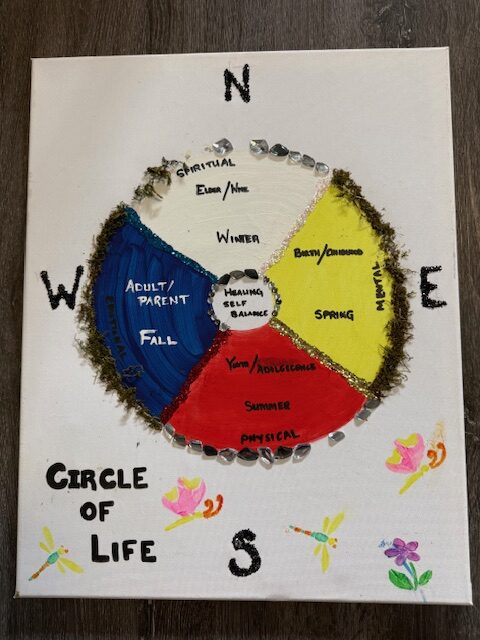
Please see the images below of my Restorative Justice Initiative in art form, which uses the four parts of the Indigenous medicine wheel to guide healing. Sorry, the emotional dimension is missing.
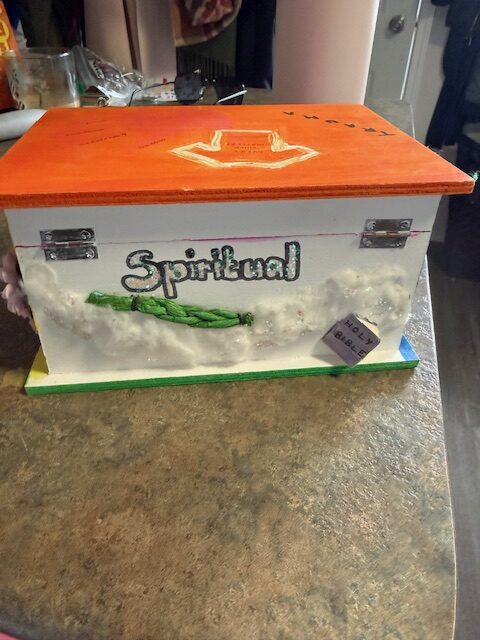
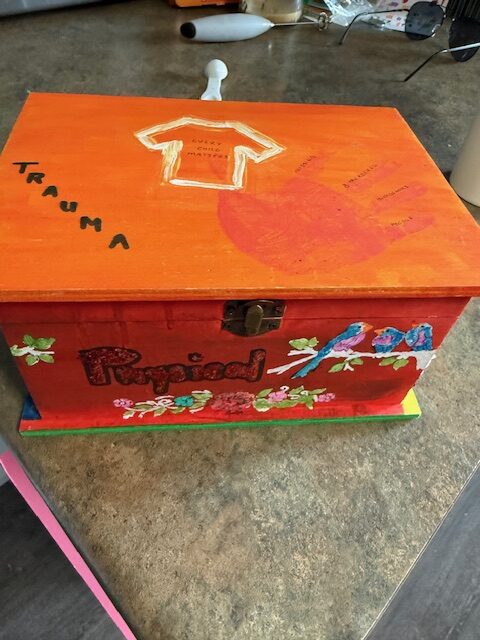
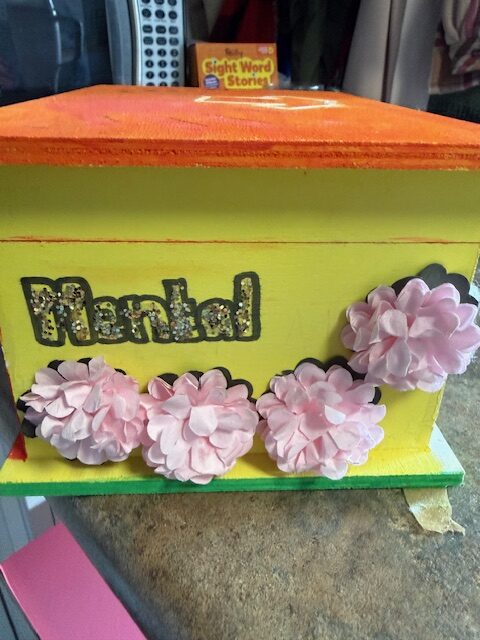
A central aspect of my learning across courses was the Medicine Wheel, which I integrated into both analysis and creative work. This framework supported my understanding of balance between the physical, emotional, mental, and spiritual dimensions of healing and justice. It also strengthened my understanding of holistic approaches to wellbeing and accountability.
It is also important to recognize that knowledge does not end at the edge of provincial or territorial borders. Indigenous knowledge systems are immemorial and extend beyond imposed colonial boundaries. They are not confined by jurisdictional lines, but are rooted in land, relationships, and generations of teachings that continue across time and space. Overall, I approach Indigenous knowledge systems with humility and respect, recognizing them as living systems that require responsibility, relationality, and ongoing learning.
- Demonstrate knowledge, through experiential learning, of key human rights and social justice issues locally, nationally, and/or globally.
My experiential learning during this program was primarily shaped through remote practicum work, which presented both limitations and unexpected insights. While I found remote work challenging, as I would have preferred an in-person office setting, it was accommodated by my responsibilities as a single mother. Through this experience, I recognized significant gaps in Indigenous research, particularly around policy frameworks and government documentation, where clauses and definitions often limit Indigenous nations.
Presentations and group work strengthened my experiential learning by allowing space for diverse voices and critical engagement with human rights and social justice issues. These collaborative environments also helped me identify personal strengths and areas for growth. A highlight of this learning included visiting an art gallery on the North Shore, created by a former cohort student whose work supports the local homeless community. This experience demonstrated the power of creative expression and community engagement in addressing social issues.
Additionally, field course discussions on research methodologies, including contributions from Indigenous Elders and knowledge keepers, deepened my understanding of Indigenous ways of knowing. These teachings emphasized land-based learning, relationality, and community involvement as essential components of meaningful research practice. Through my practicum, I was also given the opportunity to have my work recognized in a legal magazine, which highlighted my research contributions, and I was honored to receive the BC Graduate Scholarship. These experiences further strengthened my confidence and sense of academic direction.
This experiential learning reinforced that post-secondary education must extend beyond the classroom into lived experience and community engagement in order to meaningfully address human rights issues locally, nationally, and globally. I learned that hands-on learning is essential for meaningful social change and justice work, as it connects theory with lived community realities in tangible ways.
- Creatively engage in finding solutions to issues of justice and fairness in contemporary society at a community, provincial, national, and/or global level.
I have actively engaged in creatively finding solutions to issues of justice and fairness in contemporary society at community, provincial, national, and global levels through art, script writing, and media-based dissent. Creative expression has been a central part of how I process, understand, and respond to human rights issues, particularly those impacting Indigenous communities.
In January 2026, I participated in the Profs Pick Art Gallery at Thompson Rivers University, where my artwork was selected from my Art, Media, and Dissent course. It reflected themes of resistance and social justice. I contributed an MMIW-focused piece advocating for Missing and Murdered Indigenous Women, Girls, and Two-Spirit people, amplifying awareness and resistance through creative expression. Although the piece remained untitled due to a three-car collision over the Christmas break, it still represented my commitment to advocacy through art.
In my Settler Colonialism course, Dr. Lisa Cooke and Dr. Robin Westland supported a decolonizing approach to learning by centering Indigenous knowledge systems and critical engagement with settler colonial frameworks. For the final project, I grounded my creative work in my Indigenous restorative justice initiative and Medicine Wheel teachings. Through this piece, I explored how the four directions represent holistic healing, balance, and accountability, emphasizing that reconciliation requires emotional, mental, physical, and spiritual alignment. I also reflected on forgiveness not as excusing harm or returning to unsafe relationships, but as releasing oneself from anger and resentment.
Through Truth to Power script writing, I developed a play addressing water justice and the ongoing inequities faced by Indigenous communities across Turtle Island. This work continues to shape my commitment to justice-oriented creativity and community-based advocacy. These experiences, I have learned that creative expression is a powerful tool for social change. Art, storytelling, and performance create accessible and immediate ways to engage with real-life issues, center marginalized voices, and support pathways toward healing, dialogue, and systemic change.